


- The gathering in Sens brought together Sébastien Lecornu, François Hollande and Édouard Philippe to discuss the challenges ahead.
- Nobel laureate Philippe Aghion and Brice Teinturier analysed the country’s economic outlook and social climate.
- Overhauling local government relations and the green transition were at the heart of discussions between local and national representatives.
Sovereignty and the outlook for the future
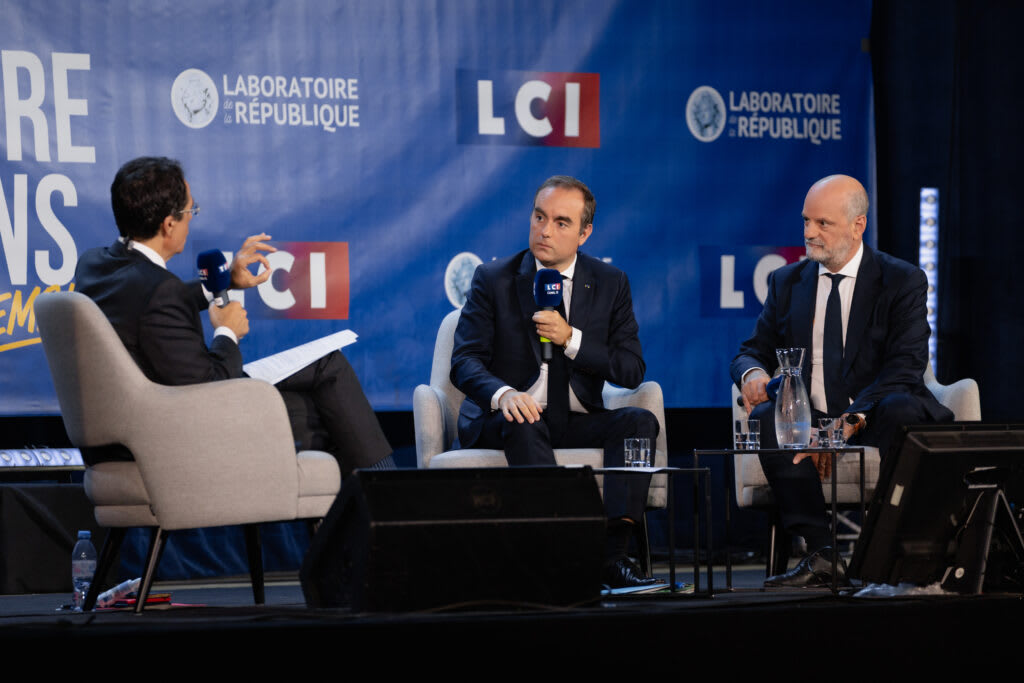
On 28 and 29 August 2026, the town of Sens hosted the summer school of the Laboratoire de la République. This intellectual and political forum provided an opportunity for leading figures to clash over ideas, particularly regarding the definition of modern French sovereignty. Sébastien Lecornu and Jean-Michel Blanquer opened the discussions by questioning France’s place in a rapidly changing world order. To close the event, a head-to-head debate between former President François Hollande and Édouard Philippe pitted two visions for the country against each other as the next presidential election approaches. These exchanges highlighted the need to develop structured political projects to meet the new democratic challenges of the 21st century.
Economy, immigration and national cohesion
The societal segment of the event began with an in-depth analysis of public opinion. Brice Teinturier and philosopher Pierre-Henri Tavoillot deciphered citizen expectations through the « 2026 Republic Barometer », pointing to a persistent attachment to republican values despite marked concerns over integration. The economic segment, enriched by a contribution from Nobel laureate Philippe Aghion, focused on the reforms needed to build a new growth pact. In addition, figures such as Valérie Pécresse, Sarah El Haïry and Guillaume Larrivé debated immigration policies, while Bernard Cazeneuve argued for republican reconciliation. The search for a balance between economic dynamism and strengthening national unity was the common thread running through these collective reflections.
Overhauling local government and the ecological challenge
The first day of the summer school focused on regional planning, with a proposal to modernise public action through a « DATAR+ » style structure. Numerous local elected officials, including Xavier Bertrand, Carole Delga, François Baroin and Hervé Marseille, stressed the importance of subsidiarity and local autonomy in revitalising the regions. The green transition was also addressed from a practical, everyday perspective — housing, mobility and natural resource management — with contributions from Agnès Pannier-Runacher and writer Érik Orsenna. The success of the environmental transition now seems inseparable from closer cooperation between the state and local authorities with expanded powers to act.